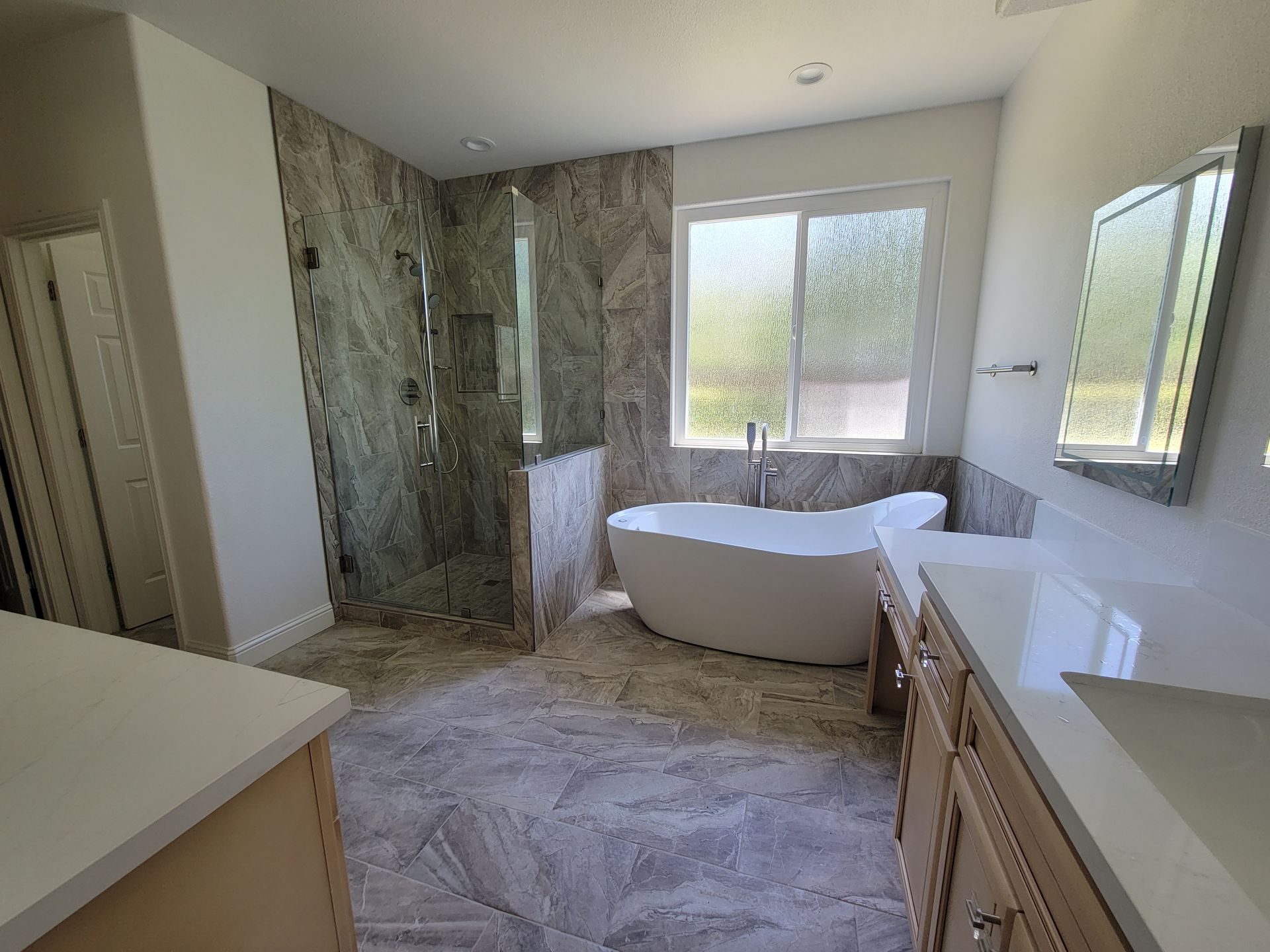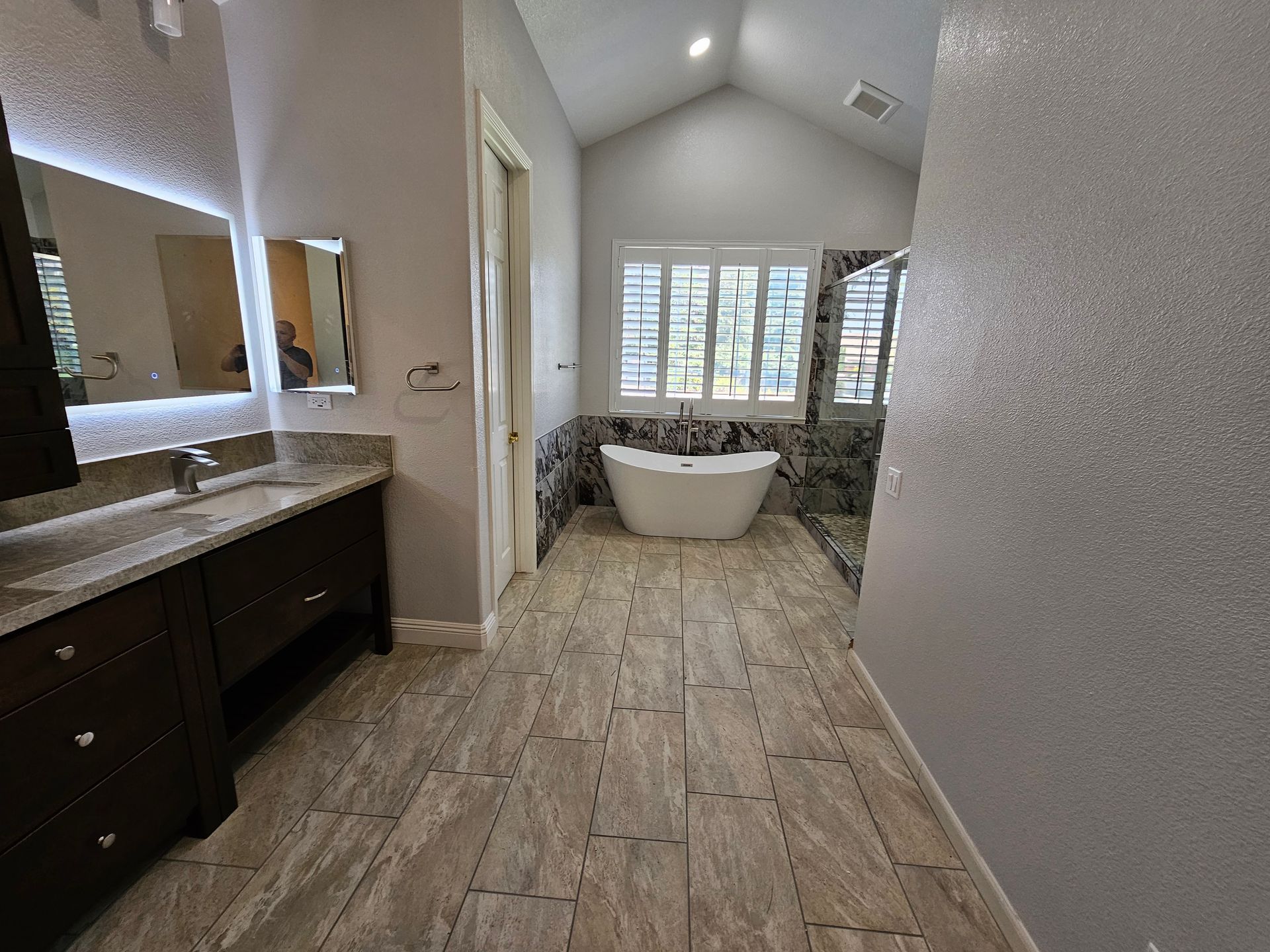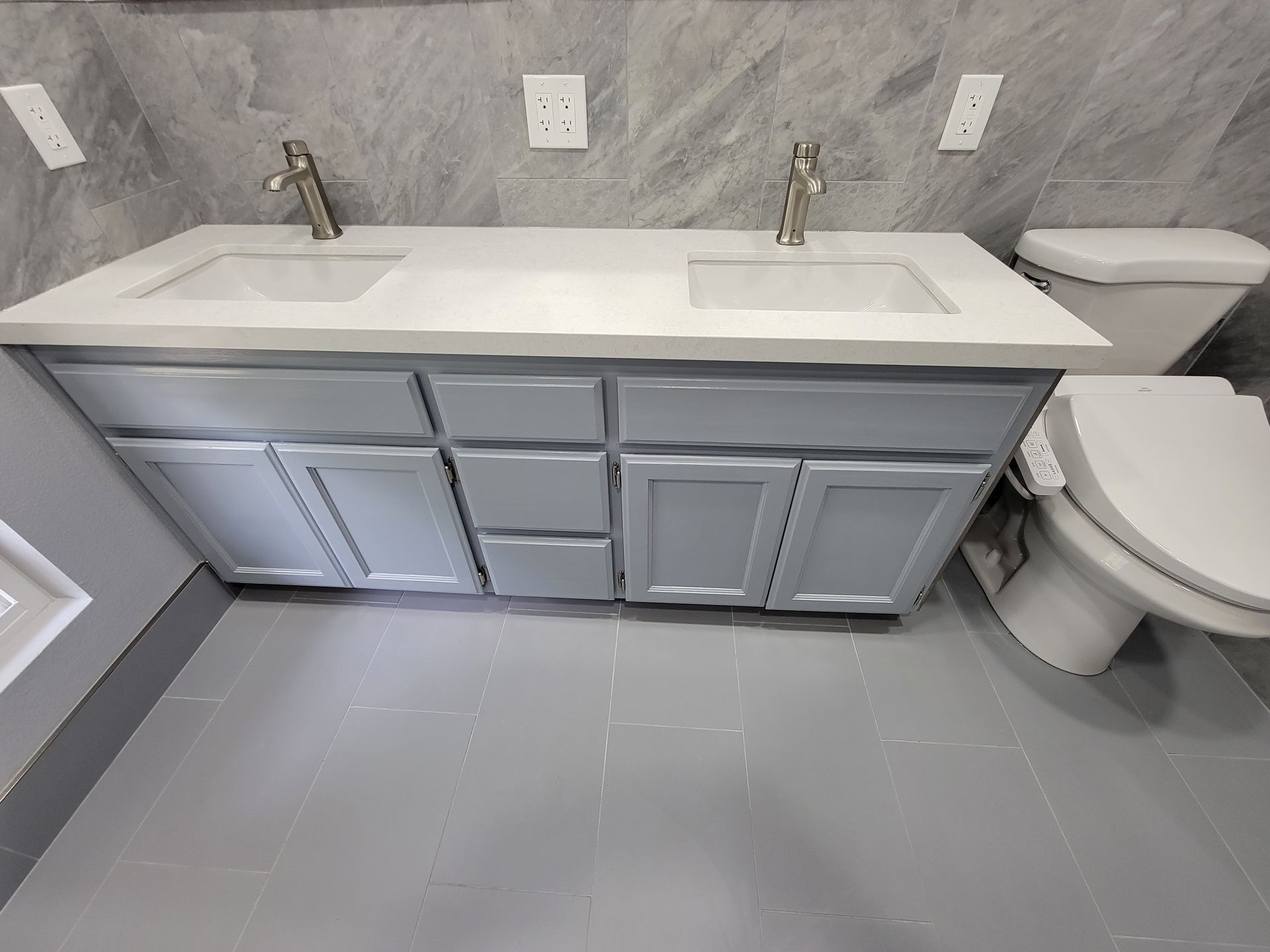
Flooring
Built to Handle Daily Traffic
Tile Flooring Installation in Livermore for kitchens, bathrooms, entryways, and commercial spaces requiring durable surfaces
D&M kitchen and bath supply completes tile flooring installation throughout residential and commercial properties in Livermore, bringing porcelain and ceramic options that withstand years of foot traffic, moisture exposure, and temperature changes. The installation process begins with surface leveling and layout planning to ensure that tile lines run straight and grout joints remain consistent across the entire floor. When the substrate is properly prepared and tiles are set with the correct adhesive, the finished floor resists cracking, shifting, and water infiltration that can compromise cheaper installations.
The work involves more than setting tile on a flat surface—installers measure the space to determine where full tiles should run and where cuts will be least visible, then mix and apply thinset mortar at the correct consistency to bond tiles without voids underneath. Grout is installed after tiles cure, sealing joints to prevent moisture from reaching the substrate while allowing slight movement that prevents cracking as the building settles.
Schedule a property evaluation to review subfloor condition and discuss tile material options for your space.
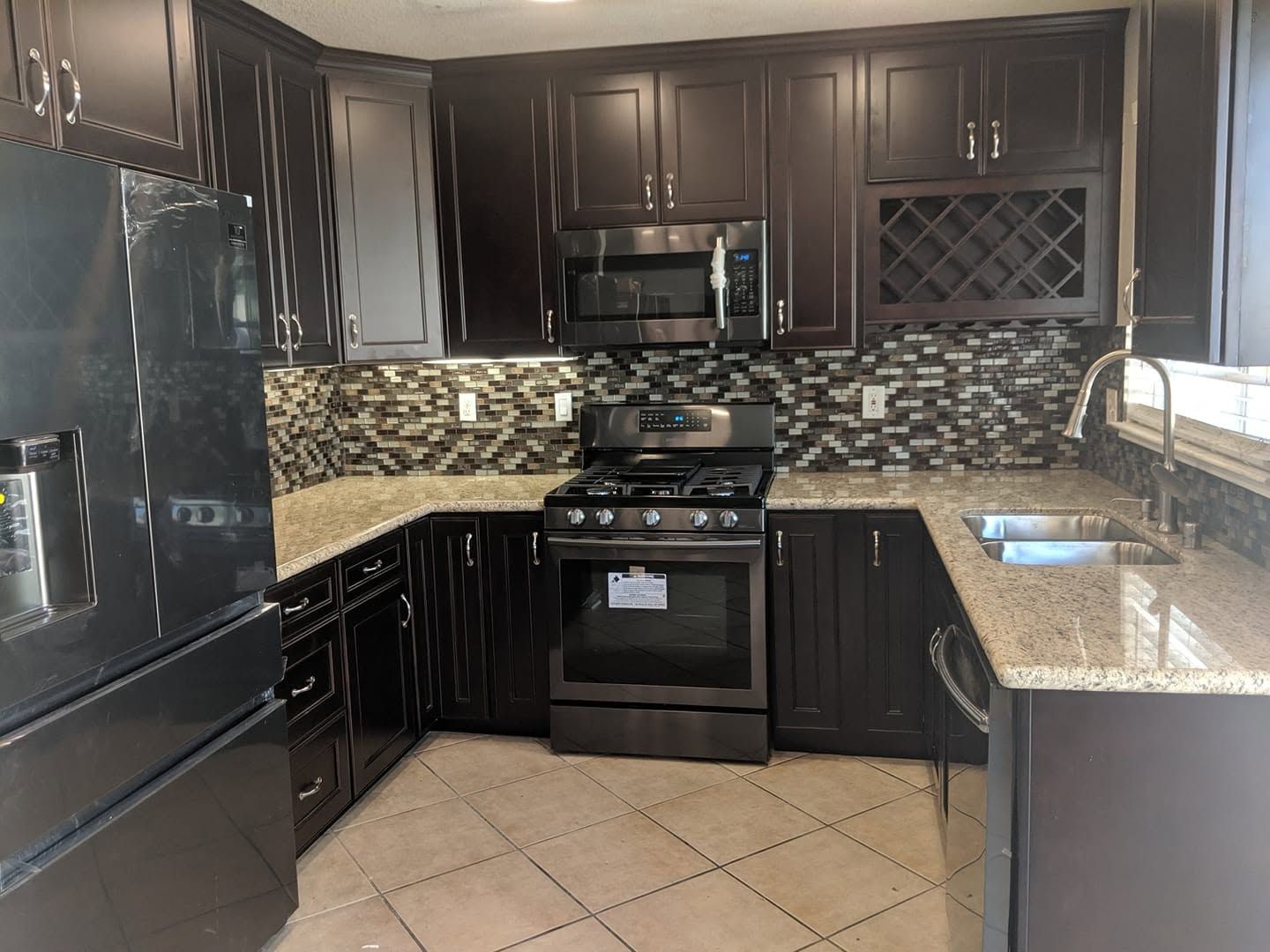
What Proper Installation Requires
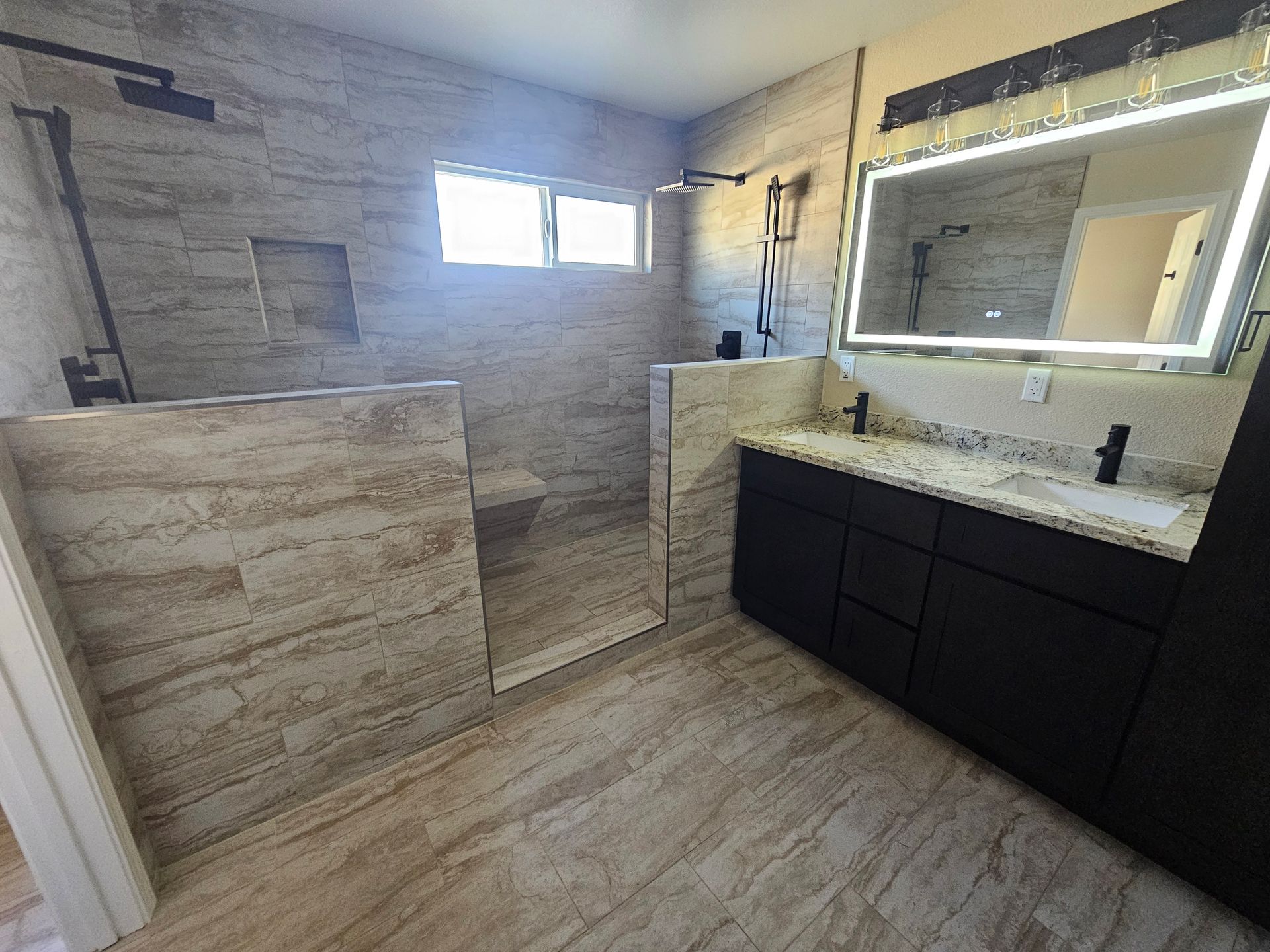
Installation quality depends on substrate preparation before any tile is set—the subfloor must be flat within industry tolerance, clean of debris, and structurally sound enough to support tile weight without flexing. When these conditions are met, installers lay tiles with spacers that maintain uniform grout lines, checking level frequently to prevent lippage where one tile edge sits higher than the adjacent piece.
After installation completes, you'll notice a floor that feels solid underfoot with no hollow sounds when walked on, grout lines that run consistently from wall to wall, and tile edges that align without abrupt height differences.
Porcelain tile retains its appearance through years of mopping and foot traffic, while properly sealed grout resists staining from spills that would discolor untreated joints.
The installation includes edge transitions where tile meets carpet or hardwood, ensuring that height differences are managed with appropriate thresholds rather than abrupt drops that create trip hazards. For commercial spaces, the tile selection must account for slip resistance ratings and the expected volume of foot traffic that will cross the surface daily.
What Property Owners Usually Ask
These questions come up frequently as property owners plan tile flooring projects in Livermore and evaluate installation requirements.
What preparation does the subfloor require before tile installation?
The existing floor must be removed if necessary, the subfloor inspected for damage or movement, and a cement backer board installed in wet areas like bathrooms to provide a stable, moisture-resistant base that prevents tile from cracking.
How does porcelain tile differ from ceramic for flooring purposes?
Porcelain is denser and less porous than ceramic, making it more resistant to water absorption and better suited for high-moisture areas or spaces that experience temperature fluctuations, though both materials perform well when installed correctly over proper substrate.
When should grout be sealed after installation?
Grout should cure for at least 48 hours before sealer is applied, and the sealer needs reapplication every one to two years depending on foot traffic and cleaning frequency to maintain stain resistance.
What tile size works best for small bathrooms or entryways?
Smaller tiles like 12-by-12-inch or mosaic sheets often suit compact spaces better because they require fewer cuts around fixtures and corners, though larger tiles can make a small room appear more expansive if layout is planned carefully.
How long does the floor need to cure before it can handle furniture and foot traffic?
Tile adhesive typically cures enough for light foot traffic within 24 hours, but heavy furniture and appliances should stay off the floor for at least 72 hours to prevent tiles from shifting before the bond fully hardens.
D&M kitchen and bath supply coordinates tile selection, substrate preparation, and installation to deliver flooring that performs as expected from the first day. Request a detailed estimate based on your square footage, material preference, and any substrate repairs needed before installation begins.